As Julian Carr, a local historian living in the Ryburn Valley, reminded Hebden Bridge Local History Society, Sowerby Bridge was more advanced in industrialisation than Halifax, Todmorden or Hebden Bridge. Julian’s original aim was to record the history of the mills of Sowerby Bridge but he was soon questioning why industrialisation started so early in this part of West Yorkshire.
One of the key factors in the success of Sowerby Bridge was its transport links. The turnpike road opened in the 1730s, allowing innovations from the Lancashire textile industry to spread. Perhaps more important was the coming of the canal. In 1770 the Calder and Hebble Navigation opened the route to Hull, then to London and beyond. So Sowerby Bridge became an important hub for the textile trade. Soon transport companies were advertising their services carrying raw materials and finished goods from Manchester to Hull and onwards, via Sowerby Wharf.
Such opportunities contributed to innovation, expansion and greater wealth. Entrepreneurs such as the textile manufacturer Sam Hill, exported his fine cloth to exotic places. James Royd of Beeston Hall Farm also grew rich through the production of cloth, and in 1766 his son built the elegant Somerset House in a fashionable part of Halifax.
The mechanisation of the processes of cloth production grew from the ingenuity of local men as engineers, able to adapt machinery designed for cotton to the different requirements of wool. Sowerby Bridge became a place where engineers and machine makers prospered. One example was William Greenup whose company made all the mechanical parts that harnessed water power and processed raw materials to cloth. So Sowerby Bridge had the first integrated mill in the woollen industry.
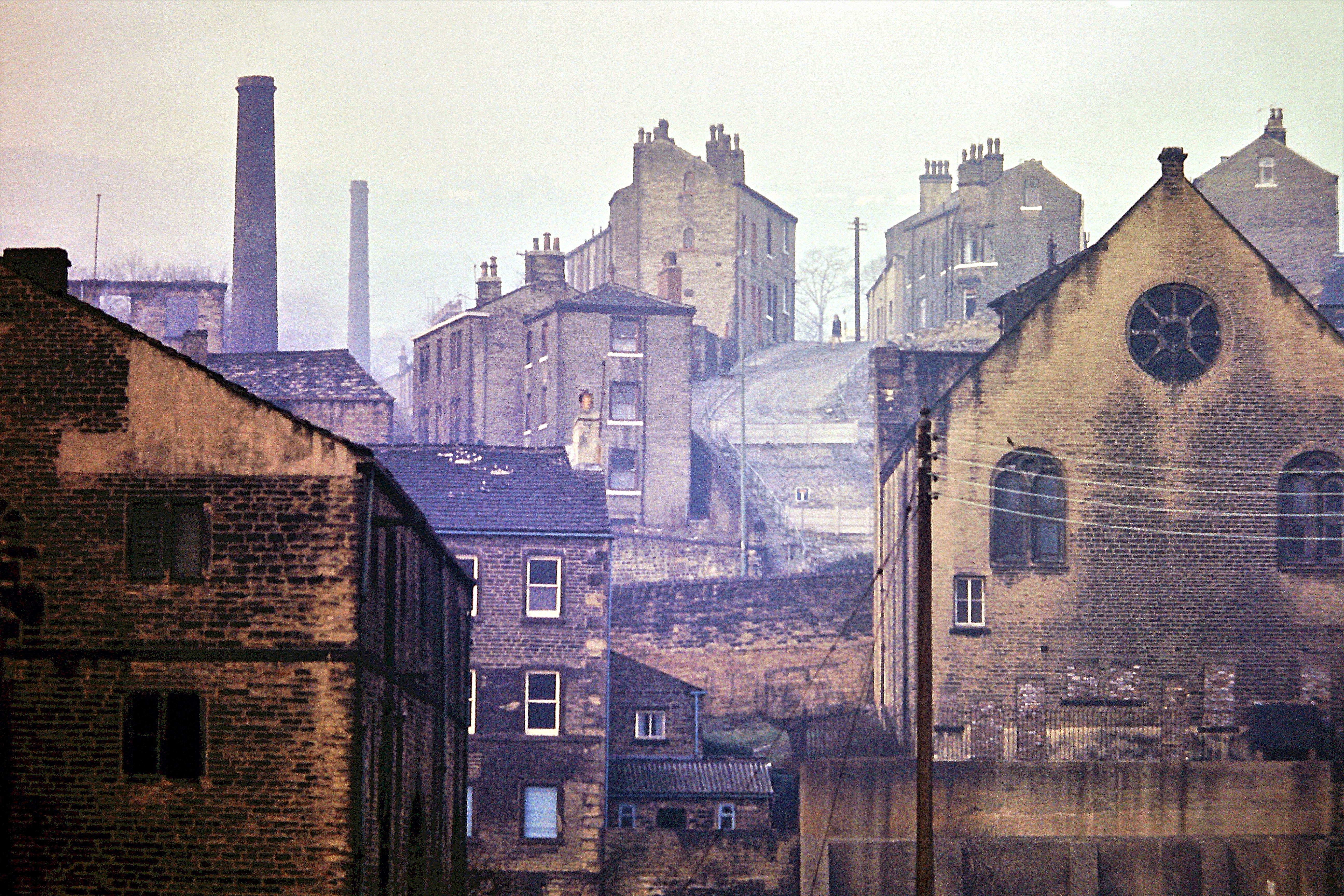
Entrepreneurs saw the advantages of building premises close to the canal in Sowerby Bridge, and the town expanded in the Georgian era. The canal basin is lined with impressive buildings, including warehouses and a Wesleyan Chapel. The success of trade led to a growth in fine residential houses as well as the landscape of an industrial village with the courtyards and squares where the workers lived.
As a thriving town, Sowerby Bridge also had a rich cultural life, with particular emphasis on music performed in the concert room. A new National School opened in 1838 and in 1839 was the venue for a great exhibition celebrating art and crafts, including achievements in engineering. Sowerby Bridge in 1905 was perhaps at its peak, with nearly 300 shops and more than 24 working mills.
Some Sowerby Bridge mill workers have left reminiscences which bring to life the experience of living and working in the mill town, collected in Ryburn Valley Reflections, a pamphlet held in the Library. Julian has also recorded conversations with people who worked in the mills up until the 1970s. There was a pride in skills gained and the interaction of different ages helped young workers to negotiate their adult lives. Strongest of all was the sense of belonging to a special community in the mill town of Sowerby Bridge.
Julian’s book ‘The Making of Sowerby Bridge’ is available in local bookshops.